
It all started with a postcard. I was browsing a boutique tucked inside an art gallery, one of those places where time feels suspended, and I found something that stopped me in my tracks. I couldn’t even describe it—it was haunting, like something was gone yet still present. I looked up the photographer and discovered she was a Russian woman living in Cairo. I knew immediately I had to meet her. That woman is Xenia Nikolskaya.
Who Is Xenia Nikolskaya?
Xenia wears many hats: art historian by training, photographer by accident, teacher of photography, and occasionally curator, archivist, and researcher. On the good days, she says, she picks up her camera and photographs.
Her journey into photography was unexpected. “It’s like a Bollywood story,” she laughs. Her father was a prominent Soviet photographer, but she grew up without him and discovered him through the lens of photography. “I started completely independently, almost by accident,” she explains. Working in the conservation department at the Russian Imperial Art Academy in St. Petersburg during the chaotic late ’90s, Xenia was nudged into photography when a colleague left to become a sommelier. She learned on the job, experimenting with overexposed film, disassembling cameras, and photographing heritage pieces, rather than people or landscapes.
“I started photographing art pieces for conservation. It’s very meticulous, almost boring, but precise light and technique reveal everything about the object,” she says.
From Russia to Egypt: A Twist of Fate
Xenia’s move to Egypt was also serendipitous. In 2003, she received a call to join a Russian archaeological mission in Memphis. “I had studied ancient Egyptian art in slides, never dreaming I’d be here,” she recalls. That first fieldwork gave her a narrow glimpse of Egypt: long hours under the sun, photographing, and only fleeting visits to the Egyptian Museum. It wasn’t until 2006 that she returned and began the project that would define her career.
“Dust”: Documenting Forgotten Villas
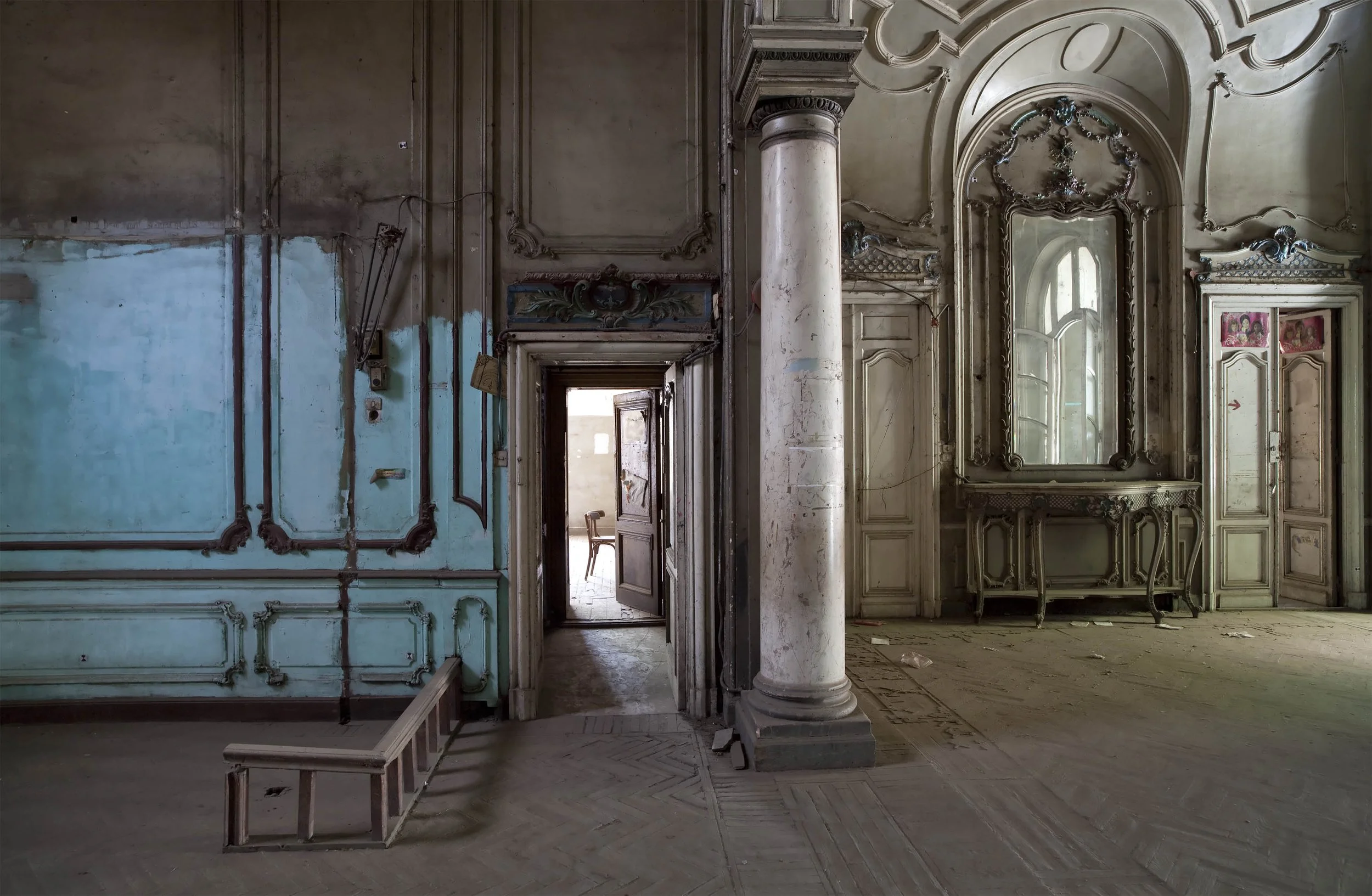
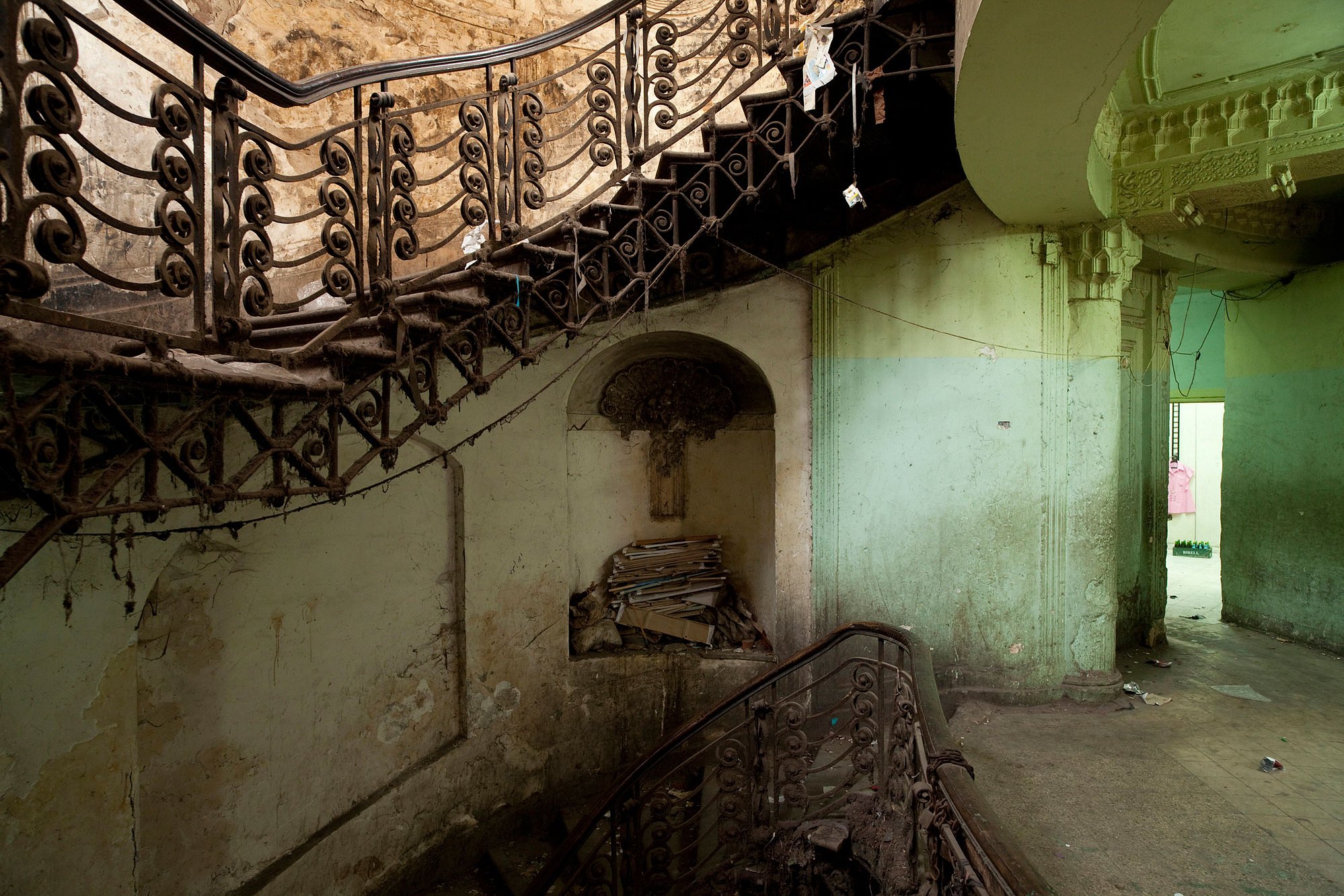
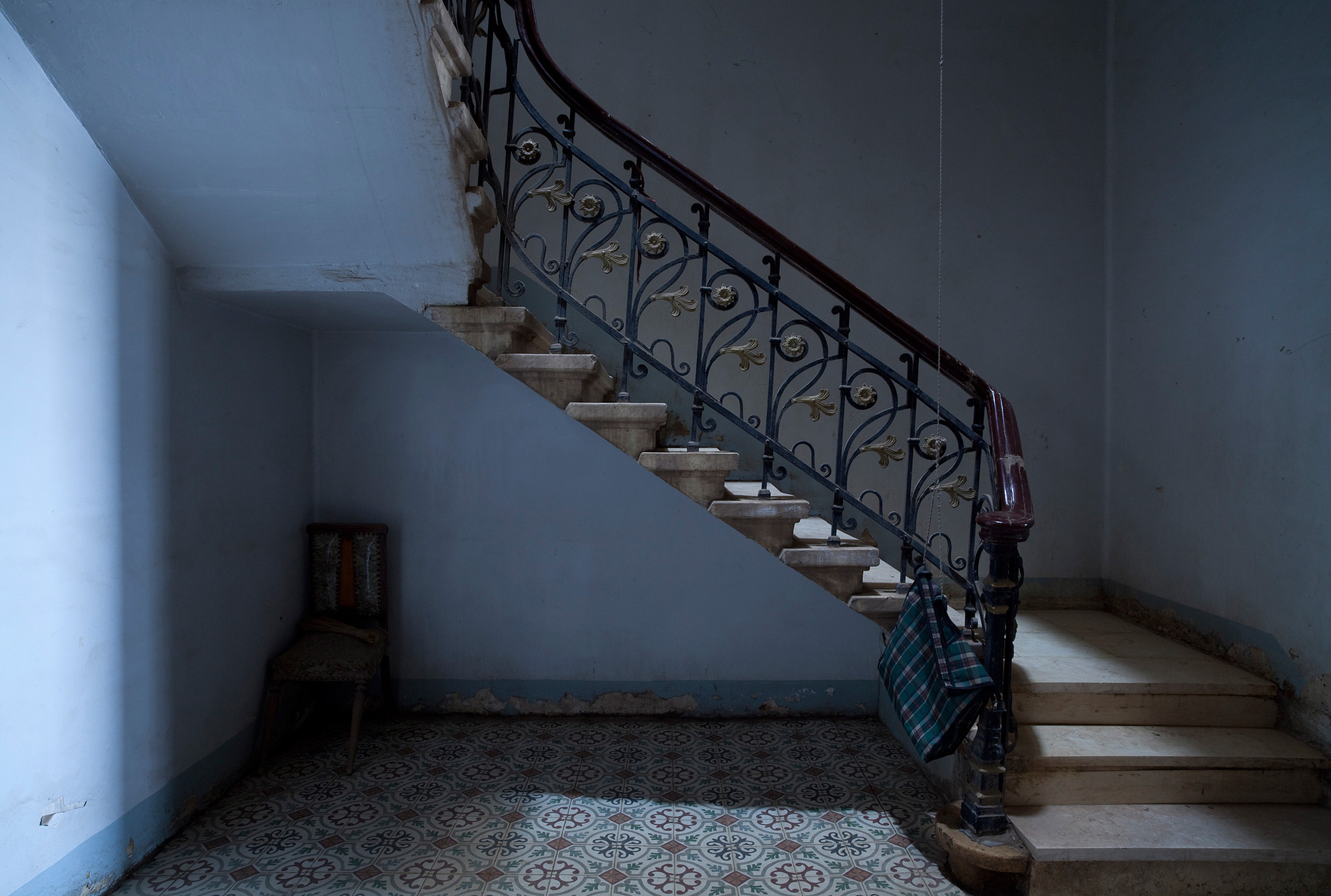
The postcard that drew me to Xenia was actually the cover of her book Dust, documenting abandoned villas and forgotten spaces in Egypt from the late 19th and early 20th centuries. Originally published by Dewi Lewis, the second edition was expanded in collaboration with AUC Press and accompanied by an exhibition at Tintera Gallery.
“The project spans 16 years, from 2006 to 2021,” she says. “I could have kept going indefinitely, but it felt time to explore something new.”
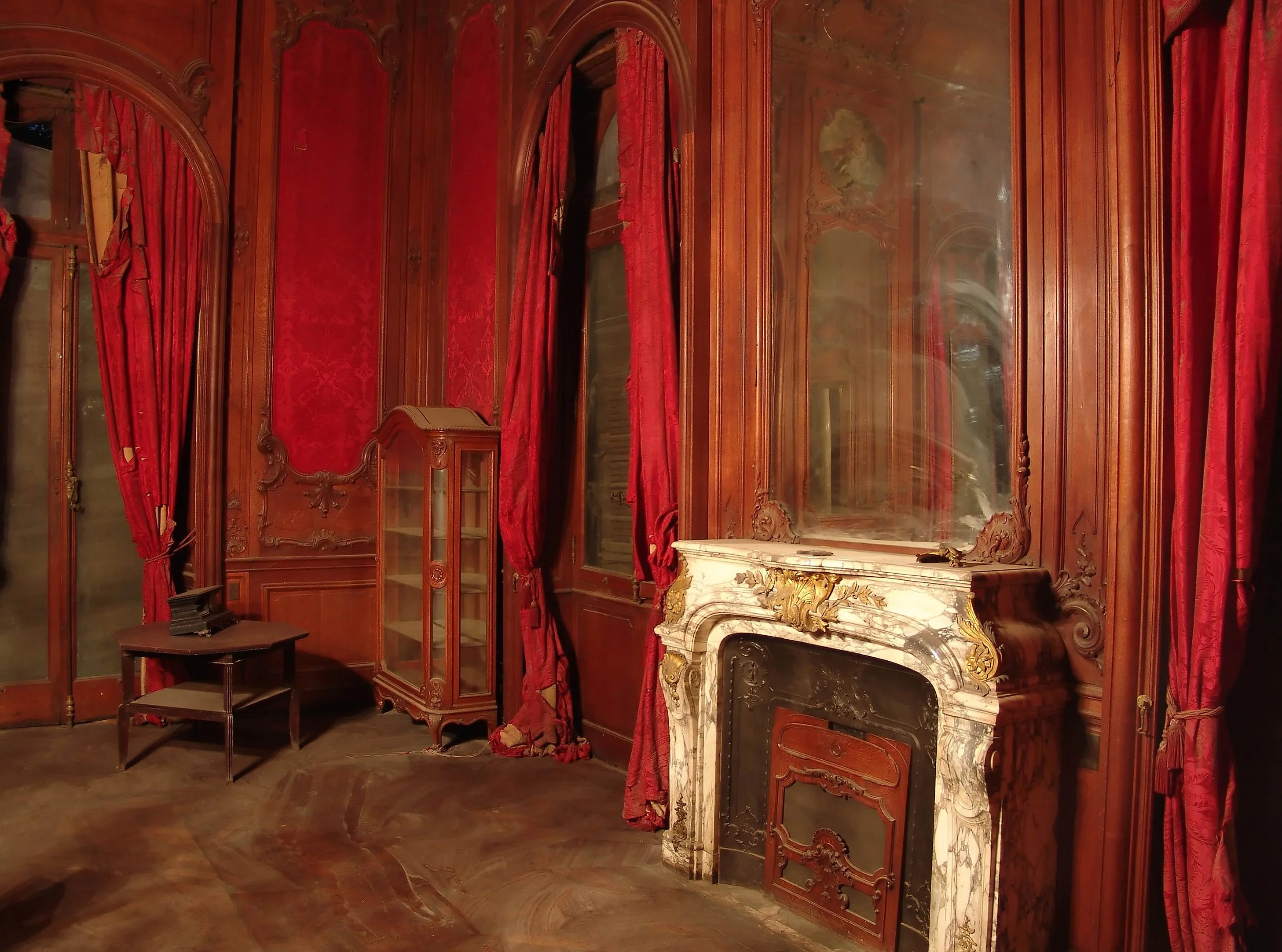
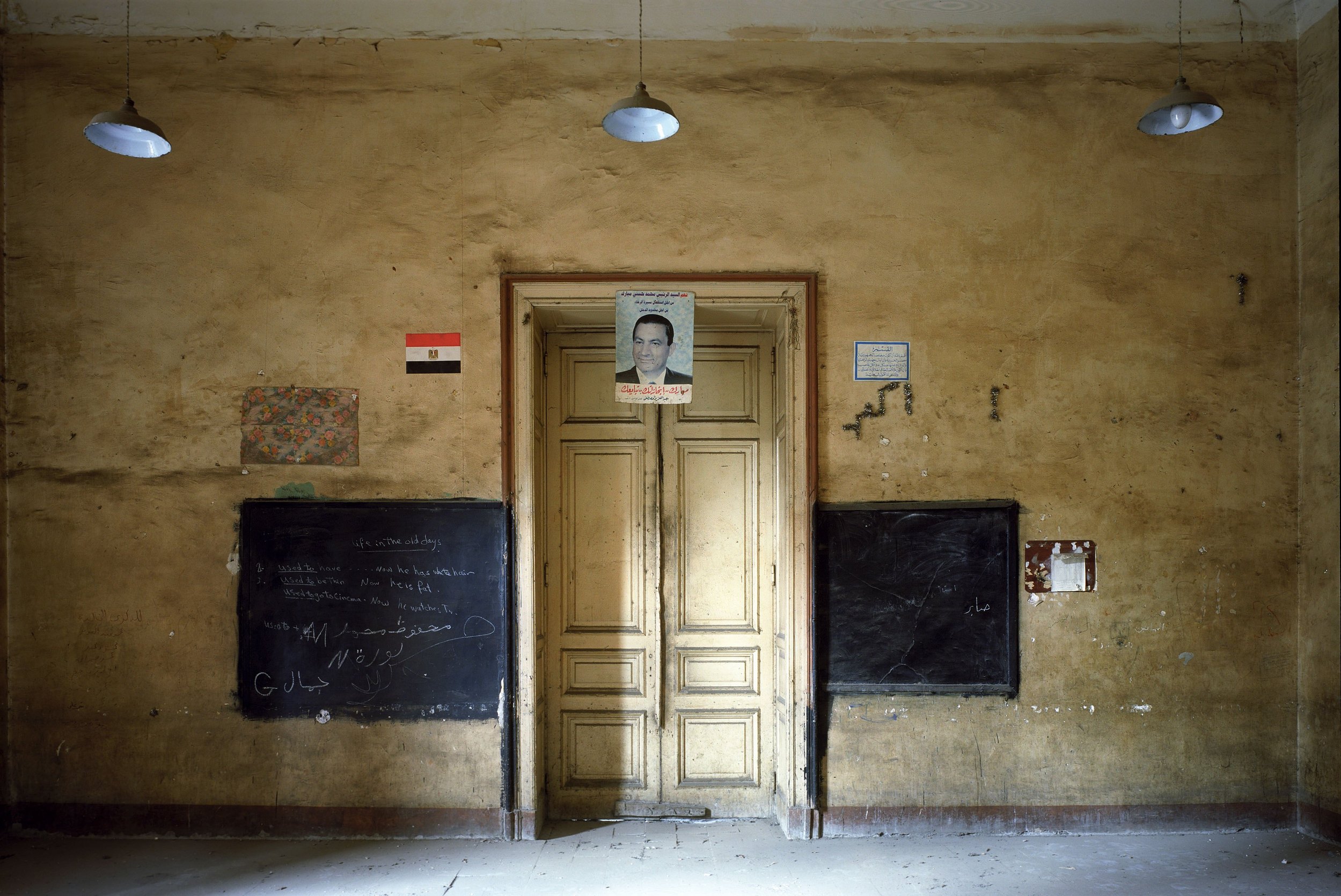
Three images stand out as emblematic of her work. A classroom in Said Halim Palace, captured in 2007 with Hosni Mubarak’s portrait hanging on the wall; Casdagli Villa in Garden City, photographed just before its renovation in 2011; and Serageldin Palace, the cover of her first edition, with its red-hued interiors that marked the project’s beginning.
“It took time, research, and social skills to access these spaces,” she notes. “Photography is 85% social skills, the rest is technical. If you can’t reach the right place at the right time, technical knowledge won’t help.”
Art, AI, and the Photographer’s Vision
Xenia has a measured perspective on the rise of AI in creative work. “AI works with what already exists online. It can’t replace personal vision, which comes from life experience, education, and curiosity. That’s what differentiates one artist from another.”
For her, the essence of art is unique vision. Technical skills can be taught, but what makes a photographer or artist truly compelling is the combination of unusual experiences, diverse influences, and a personal story that informs their work.
Lessons from Mentors and Life
Mentorship for Xenia often arrives unexpectedly. A brief conversation with Swedish photographer Kent Klich once shifted her entire perspective, even though they only meet every five years. “The most important thing is to follow what you feel is right and figure out the rest along the way,” she advises. Being an artist, she explains, is about taking responsibility, managing solitude, and turning it into creativity.
Current Projects: Plastic Jesus and Beyond
Xenia continues to work on long-term projects. Her latest, Plastic Jesus, is a catalogue of Egyptian Christian artifacts collected over 15 years, documenting objects and interiors from Coptic churches and monasteries. “It’s like a museum of my own, a collection of beauty and meaning,” she says. Even now, she balances multiple projects, pausing only to recharge before the next long-term undertaking.
A Glimpse into Cairo Through Xenia’s Eyes
Sitting in the bookstore, surrounded by the quiet energy of books, it’s clear why Xenia’s work resonates. Her photography is a true dialogue with history, architecture, and memory. Cairo, in her lens, is alive with traces of the past, waiting to be discovered.
This interview has been edited for length and clarity.
FIND OUT MORE
Instagram: @xenia_nikolskaya_photography
All artworks © Xenia Nikolskaya

Podcast episode available:
Spotify ➜ https://shorturl.at/zItlc
Apple Podcasts ➜ https://shorturl.at/GjrrN
Anghami ➜ https://shorturl.at/H9cIH
Leave a Reply