
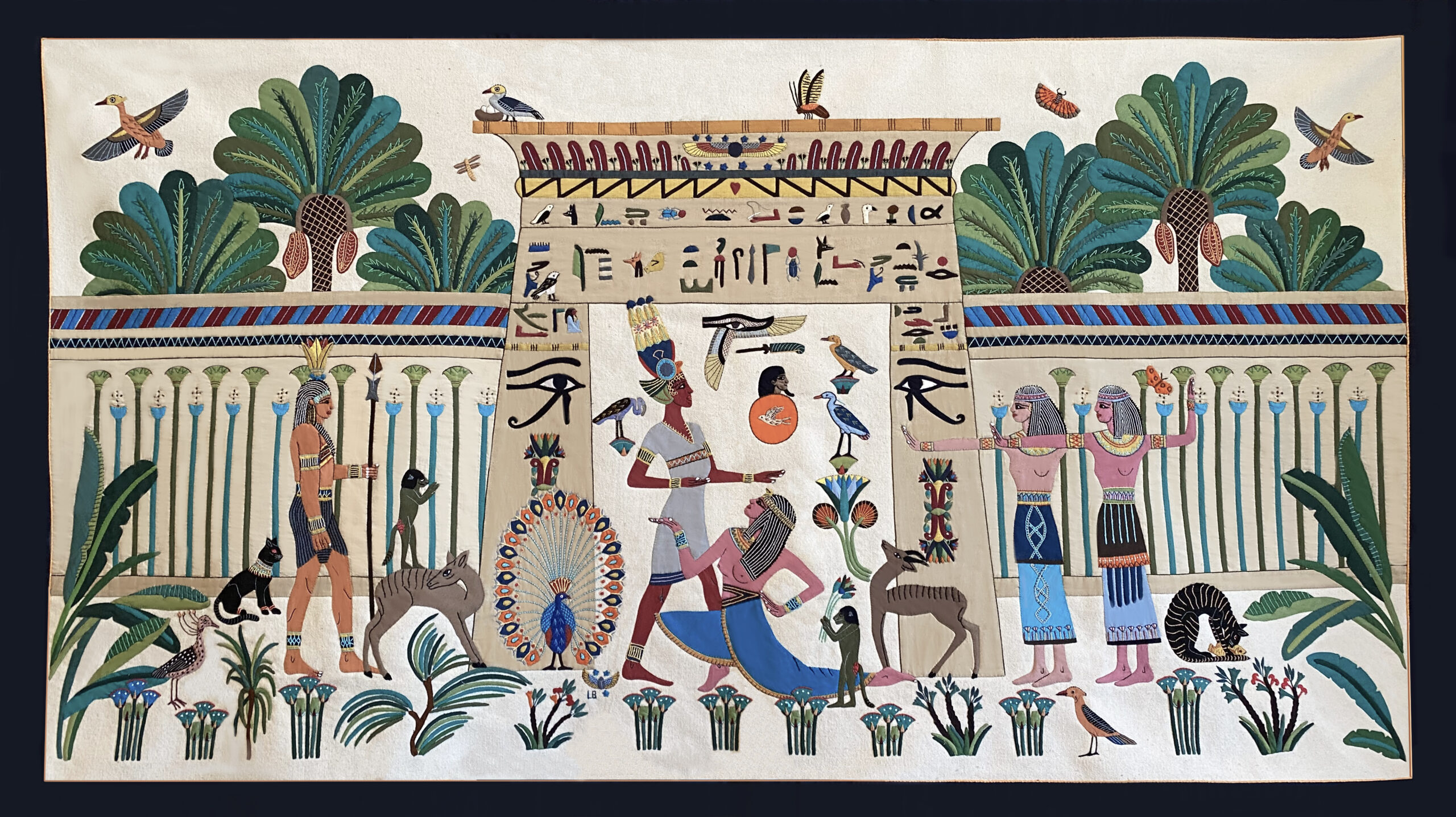
French artist and designer Louis Barthélemy moves between cultures, crafts, and geographies, creating works that celebrate dialogue and human connection. Through collaborations with artisans across Egypt and beyond, he explores questions of identity, heritage, masculinity, and cultural exchange. We sat down with him to discuss Cairo, craftsmanship, and the stories woven into his work.
Cairo, a City of Energy and Tenderness
Barthélemy first arrived in Cairo in 2017 and immediately felt drawn to the city. While many visitors experience the Egyptian capital as overwhelming, he found himself captivated by its intensity, scale, and unpredictability.
“I completely surrendered to its rhythm,” he recalls.
Over the years, Cairo has become one of his bases, a city he returns to regularly and where some of his most significant collaborations have taken shape.
“There is a real tenderness in Egypt,” he says. “I immediately felt very good here.”
This openness extends to his appreciation of Egypt’s more fluid relationship with time. Rather than resisting it, he embraced it as a way of creating space for spontaneity, human connection, and unexpected opportunities. It is a philosophy that mirrors his creative process itself: one guided less by control than by curiosity and trust.
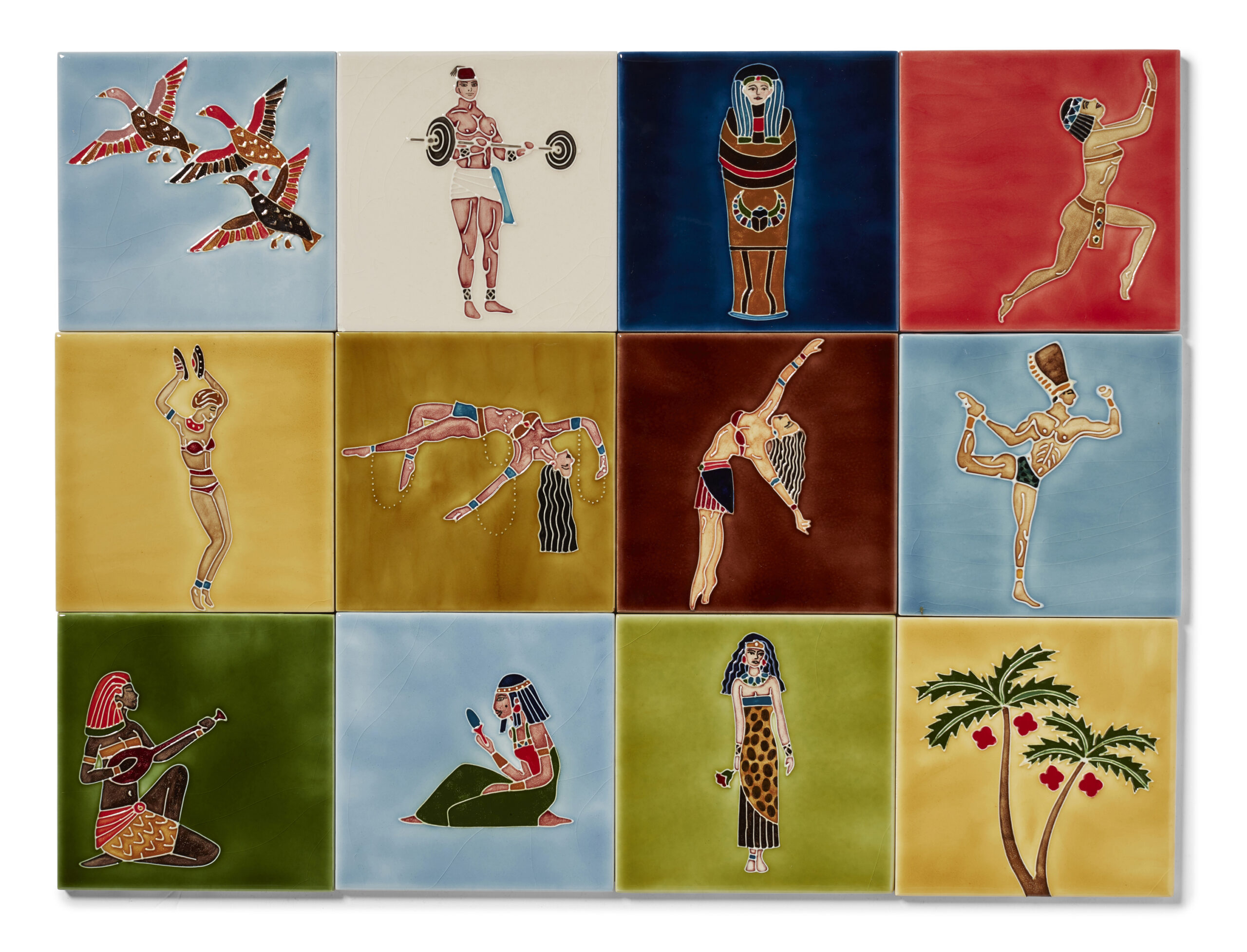
Translating Heritage Into Contemporary Narratives
A defining moment in Barthélemy’s career came during his first visit to Egypt, when he encountered the traditional khayameya artisans of Islamic Cairo. Fascinated by the centuries-old appliqué textile technique, he began a collaboration with master artisan Tarek Al-Safty that continues to this day.
What interests Barthelémy is not simply preserving traditional craftsmanship, but allowing it to participate in contemporary conversations.
“I love this exercise of translation,” he explains. “Translating a memory, translating an ancestral technique, translating a language deeply connected to a place.”
Together with artisans, he develops artworks that honour the integrity of the craft while introducing new stories and visual languages. Whether creating monumental commissions for international clients or narrative textile pieces inspired by historical encounters between cultures, his work positions traditional craftsmanship as something alive, evolving, and capable of speaking to contemporary audiences.
Underlying every project is the conviction that creation should be collaborative.
“I could draw by myself and reduce my activity to very solitary work,” he says. “But I like the human connection. I like these bridges we create through these projects.”
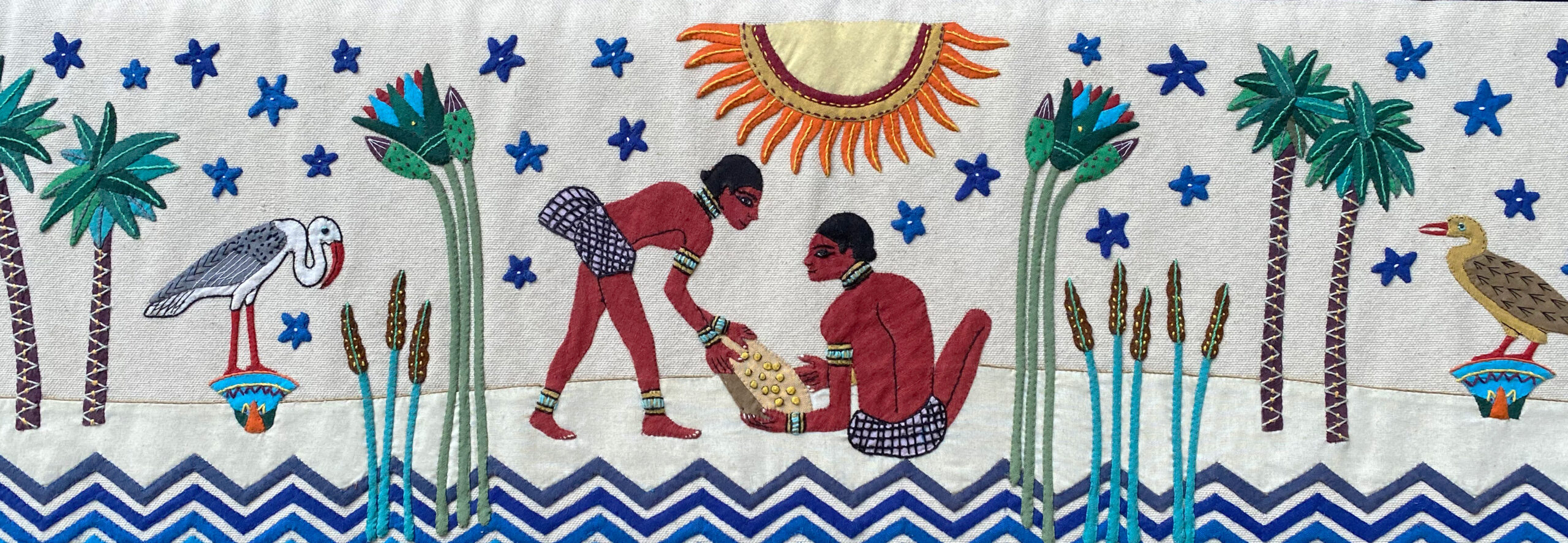
Beyond Colonial Perspectives
Working across cultures inevitably raises questions about representation, power, and cultural appropriation. As a European artist engaging deeply with craft traditions in Egypt and elsewhere, Barthélemy approaches these conversations directly rather than avoiding them.
For him, the starting point is acknowledging history without denial. He recognises the realities of colonial legacies, including cultural extraction, appropriation, and the unequal power structures that continue to shape artistic exchanges today.
Rather than positioning himself as an interpreter of other cultures, he seeks to create spaces where multiple voices can coexist on equal footing.
“I try not to place myself in the continuity of a colonial posture,” he explains, “but on the contrary in meeting the other, listening, and creating non-hierarchical spaces of conversation.”
This philosophy also informs his response to debates around cultural appropriation. The difference, he argues, lies in intention, transparency, recognition, and economic equity. A genuine cultural exchange cannot be based on extraction. It requires shared authorship, visibility for collaborators, and benefits that are distributed fairly among everyone involved.
For Barthélemy, artistic collaboration becomes a way of moving beyond inherited colonial frameworks and towards a model rooted in dialogue, reciprocity, and mutual respect.
Unstitching Hypermasculinity
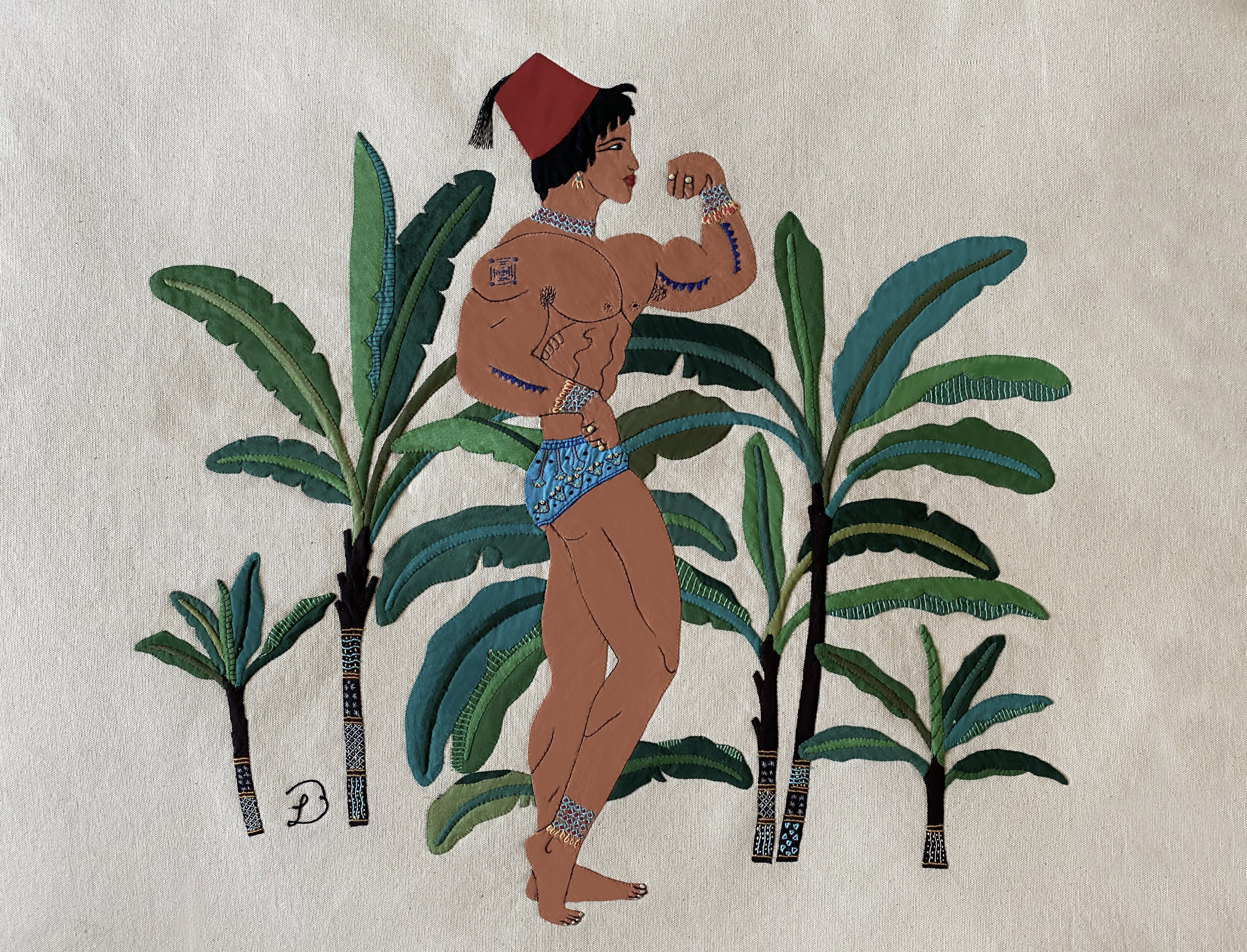
Alongside questions of cultural identity, Barthélemy’s work frequently examines masculinity and the social expectations attached to it. Through textiles, embroidery, and decorative arts, mediums historically associated with care, patience, and softness, he challenges more rigid and aggressive definitions of male identity.
“The deconstruction of toxic masculinity is very often represented in my work,” he says. “These are very violent constructions that I probably experienced when I was younger.”
Rather than confronting these issues through direct provocation, he chooses a more subtle approach. Delicate embroidered figures, playful visual narratives, and unexpected representations of male bodies invite viewers to reconsider what strength, beauty, and vulnerability can look like.
The choice of medium itself becomes part of the statement. Techniques traditionally dismissed as decorative or feminine are transformed into tools for questioning dominant narratives and proposing alternatives.
Through this work, Barthélemy is not only exploring his own experiences but also opening a broader conversation about how identities are constructed, performed, and ultimately reimagined. Much like his intercultural collaborations, these works seek to replace rigid categories with something more fluid, nuanced, and human.
Following Intuition and Going with the Flow
If there is one principle that connects Barthélemy’s work, travels, and collaborations, it is a deep trust in intuition. After leaving a career path that no longer aligned with his values and experiencing a period of illness that forced him to reconsider his direction, he learned to listen more closely to what he describes as an inner voice.
“I listen to what happens in my gut,” he says. “I am not very rational in my life choices.”
That instinct eventually led him to Morocco, then Egypt, and towards a creative practice built around encounters rather than certainties. It also shaped his understanding of identity itself.
Barthélémy rejects fixed definitions of belonging. Having built a life across different countries and cultures, he sees identity as something that evolves through encounters and experiences rather than rigid labels.
“Nothing is set in stone,” he reflects. “Everything is fluid. Everything flows.”
In a world increasingly drawn towards rigid categories and polarised narratives, Louis Barthélemy’s work offers another possibility: one where art becomes a meeting place, difference becomes a source of dialogue, and creation an act of connection.
FIND OUT MORE
Instagram: @louisbarthelemy
All artworks © Louis Barthélemy
Podcast episode available: Spotify, Apple Podcasts, Anghami.
This interview has been edited for length and clarity.