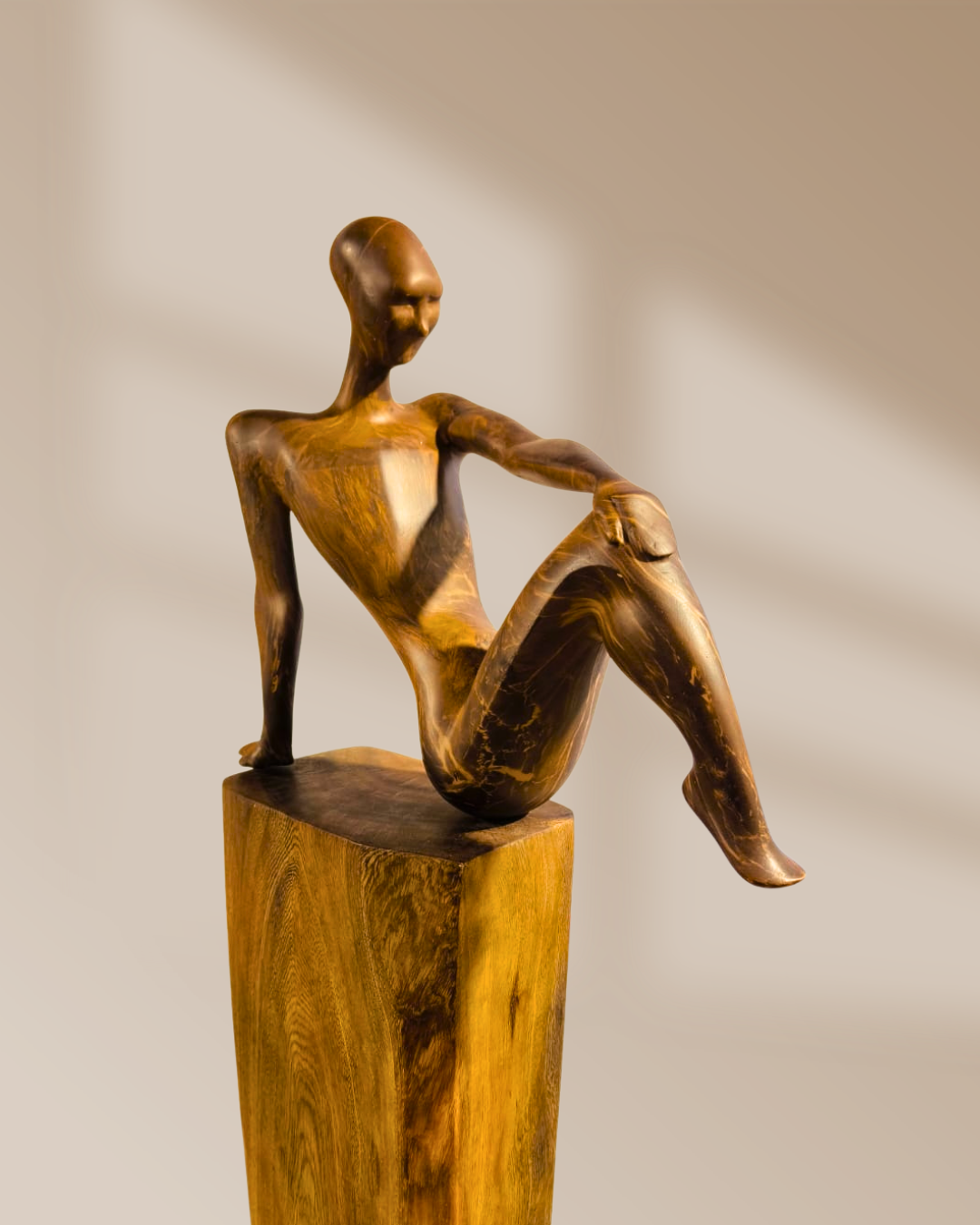
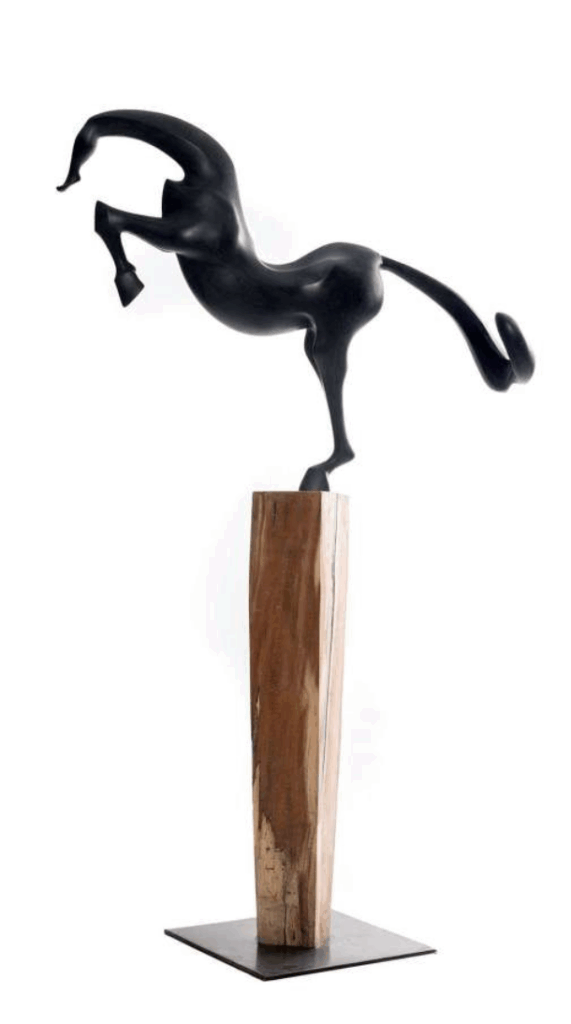
In the quietude of Fayoum, where desert meets water, I met Khaled Hamed, a sculptor whose works radiate both tension and grace. With more than thirty years in the field, he’s about to exhibit at Tam Gallery’s Cairo Art Fair West, starting 10 January 2026, as one of the most prominent Egyptian contemporary artists.
Who is Khaled Hamed?
“I’m a full-time visual artist since 2000,” he begins calmly. “An ordinary person who tries — and wishes — to remain normal.”
Born in Assiut, Khaled graduated from Assiut University’s Faculty of Education, majoring in art education. There he met the late sculptor Dr Mamdouh El Kouk, who profoundly shaped his path. “If I hadn’t met him, I probably wouldn’t be here. He taught art as a science, a rare thing, and spoke with clarity, depth, and conviction.”
Discovering Art Through Dalí
His connection to art started by accident, with a television show from his childhood called The Camera Tour.
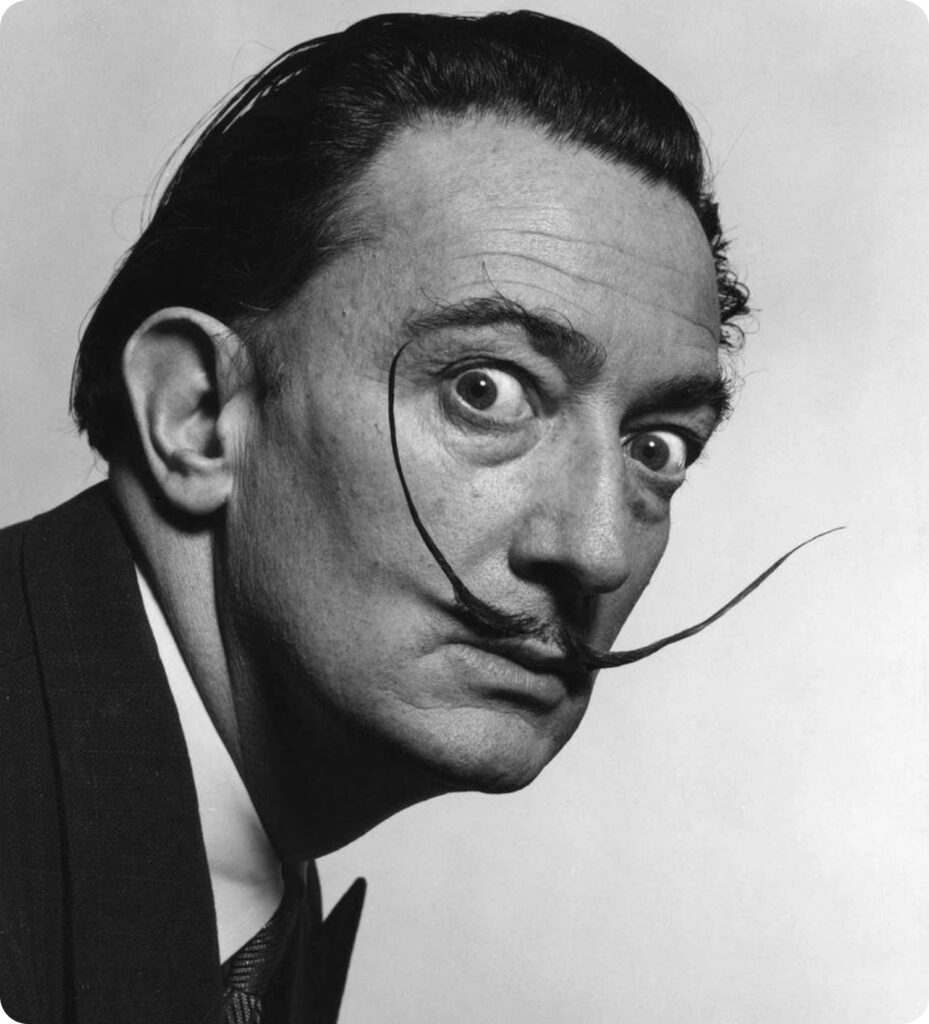
“They had an episode about Salvador Dalí,” he remembers. “This episode changed my life. Dalí was different, excessive, alive. That’s when I first understood what art could be.”
The encounter opened his eyes to artistic rebellion: the permission to be different.
Sculpture or poetry? Why choose!
Khaled writes as well as sculpts, though he doesn’t claim the title of poet.
“I write poetry as a hobby. Poetry and sculpture are both languages of expression. Sometimes words express emotions more deeply.”
For him, both are demanding but in different ways.
“Speech has a defined alphabet. You use it and create from it. But art’s alphabet which is made up of lines, dots, and colours, is intangible. To master it, you must master yourself.”
Poetry refines his eye, while sculpture condenses what words cannot hold.
On the Edge of Supplication or the search for balance
This title comes from one of his most meaningful works.
“It’s about the last prayer you say when you are out of options,” he explains. “To keep balance on a slippery edge.”
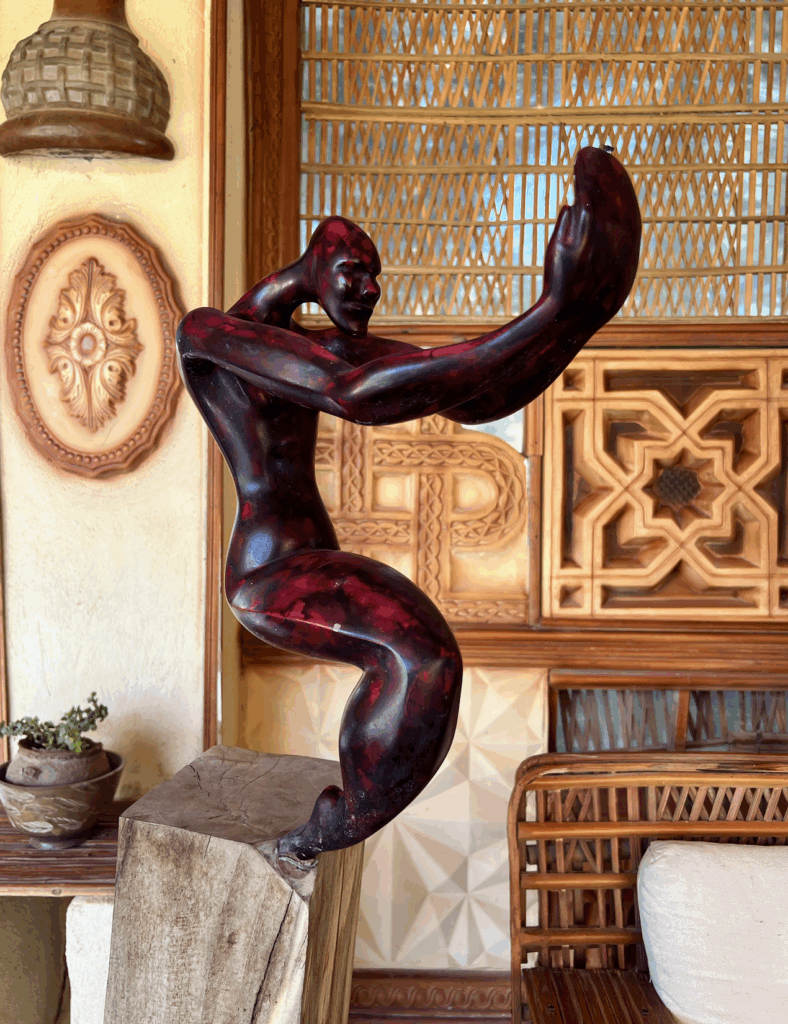
He created the work as part of an exhibition called Leg in Context.
“I started in 2016. Thirteen pieces. The exhibition was in 2021. Five years… It’s not too much when you live with the work.”
Wild Donkey or facing the darker self
Another key work, recently exhibited in Cairo’s 45th General Exhibition, is a wooden face titled Wild Donkey.
“The idea came by accident. One day, angry or tense, I looked at the mirror and I saw another man: the bad side in us all.”
That moment formed the piece as a combination of raw confrontation with instinct and aggression. He carved it in sycamore fig, the same wood used in ancient Egyptian statues and coffins.
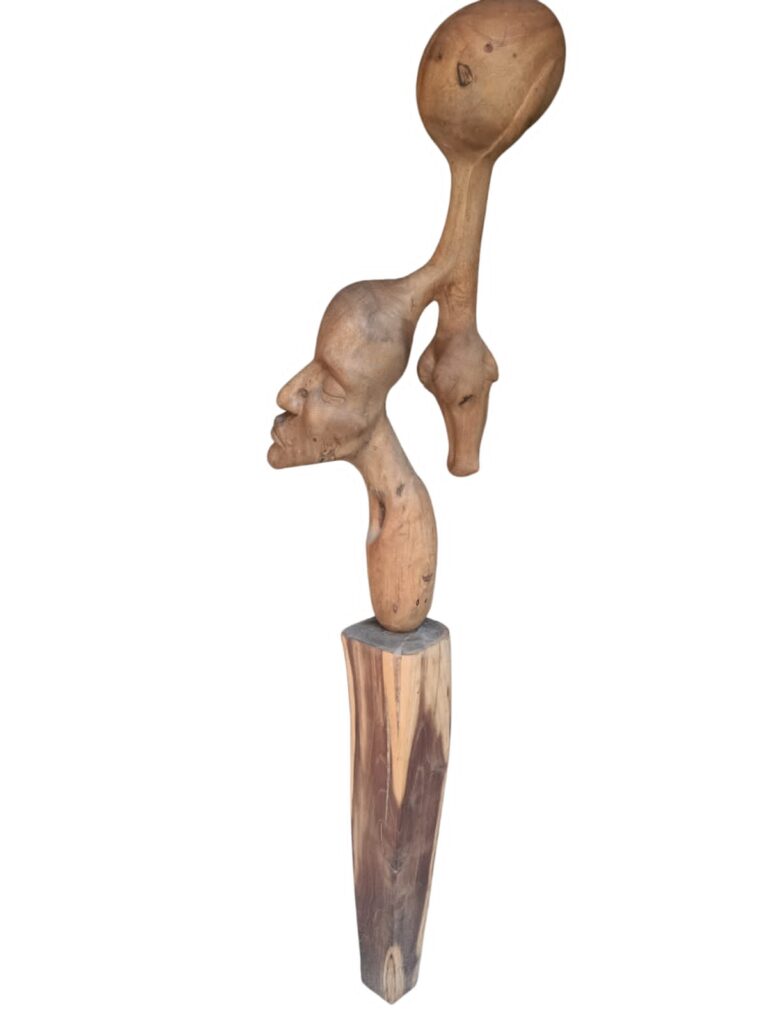
“You have to live with the wood. Each material has a secret. When the relationship is good, the material gives. The images that I have in my mind come from our genetic memory.”
A message to anyone rushing through life
Before we end, Khaled pauses. He doesn’t speak about art, but about humans.
“I hope people stop for five minutes. Forget everything they learned and think. We’re all running, not even seeing ahead. We forgot ourselves! Stop so you don’t fall down.”
A plea for awareness and a reminder that art is not a revival of the past, but a beautiful continuation of what the past left inside us.
This interview has been edited for length and clarity.
FIND OUT MORE
Instagram: @khaled_hamed_2357
Podcast episode available on Spotify, Anghami, Apple Podcasts.
All pictures © Khaled Hamed